Innovative Procedure Helps 9-Year-Old Avoid a Third Transplant at Miami Transplant Institute
By Carla Palmer
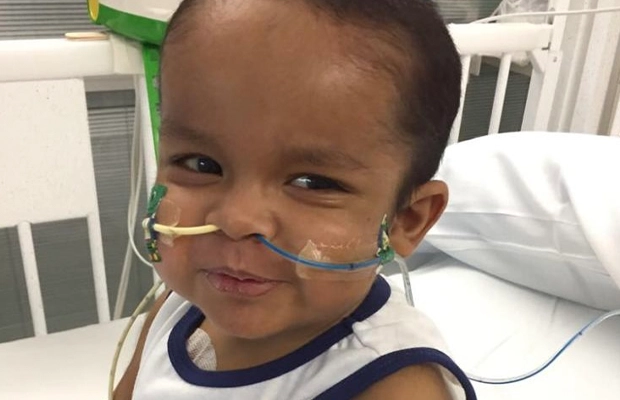
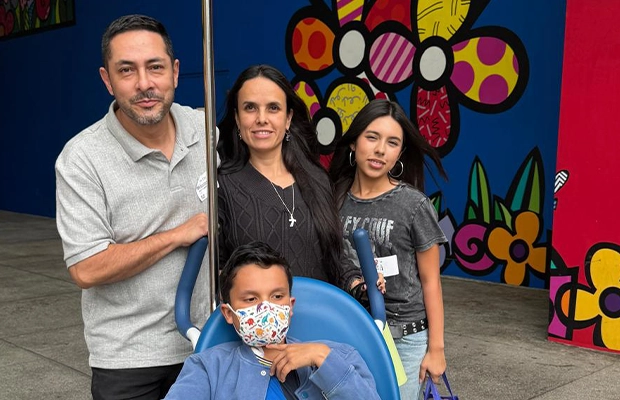
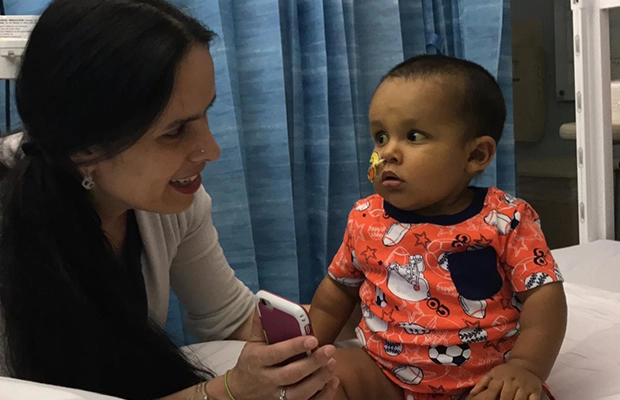
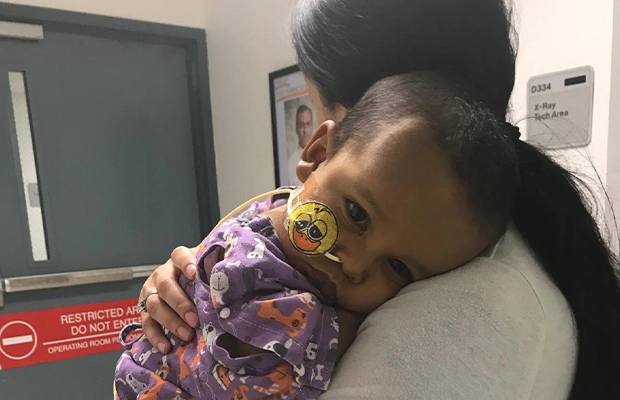
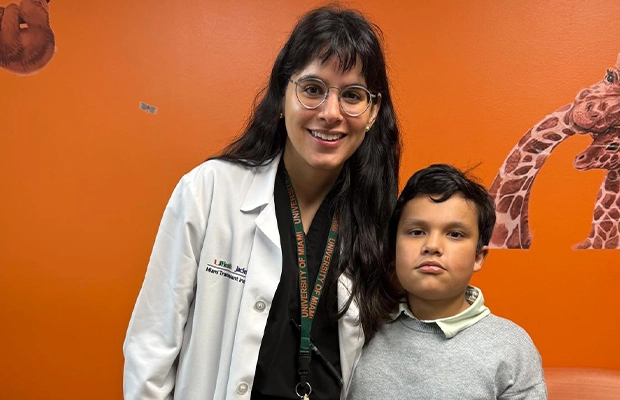
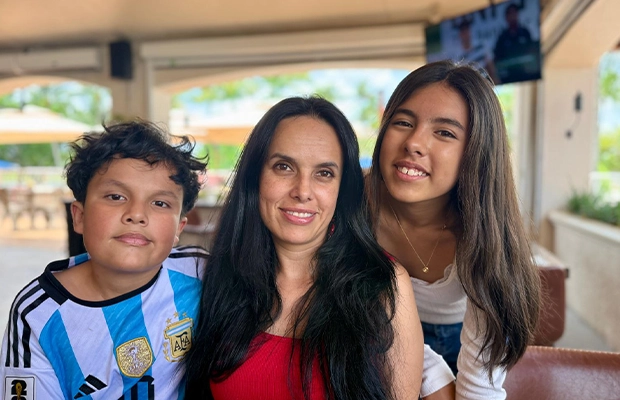
Born with Alagille syndrome, a genetic disorder that can affect the liver, heart, kidneys, and other organs, Mateo Leal has spent much of his young life overcoming obstacles many adults could never imagine. Along the way, the 9-year-old has undergone two liver transplants and faced complications that threatened his health and future.
Yet, through every setback, Mateo and his family found a team at Jackson Health System ready to fight alongside them.
“Jackson has always made an effort to help Mateo,” said his mother, Luz Gomez. “Trying to live a normal life between hospitalizations, medications, and everything else is very hard.”
After his second liver transplant, Mateo developed blood clots in blood vessels connected to his liver, including the portal vein and hepatic artery. The complications led to portal hypertension, a serious condition that caused repeated bleeding in his digestive tract and frequent hospital stays.
“He was basically coming every month to the hospital with bleeding episodes,” said Stefany Hernandez Benabe, MD, a gastroenterologist and transplant hepatologist at Miami Transplant Institute, a collaboration between Jackson and UHealth – University of Miami Health System. “We tried multiple conventional approaches to prevent the bleeding, but it kept happening.”
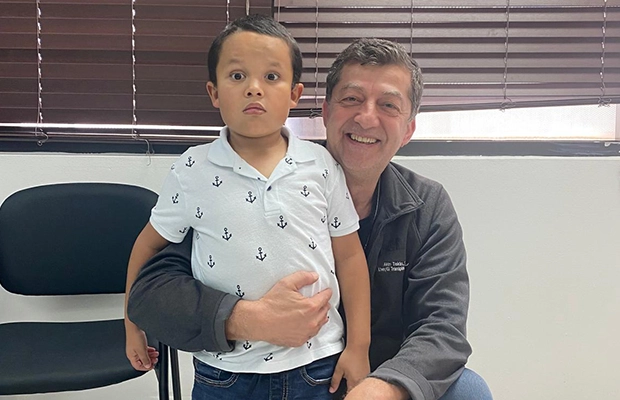
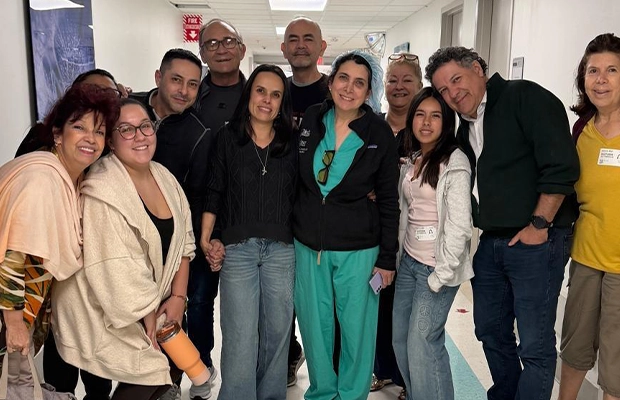
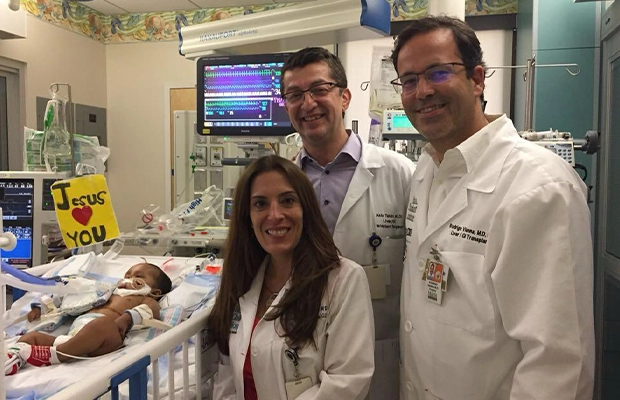
As Mateo’s condition got harder to manage, specialists from across Jackson came together to review every possible option. Leading those discussions were Dr. Hernandez; Akin Tekin, MD, a transplant surgeon; and Maria del Pilar Bayona, MD, an interventional radiologist. Together, in conjunction with a multidisciplinary team of intensive care specialists, nurses, and other experts, they carefully evaluated Mateo’s case and determined the safest path forward.
“We had to think outside the box,” Dr. Tekin said. “The only other option was a multiorgan transplant. We prepared him for potential emergency transplantation in advance as there was a chance of major complications.”
For Gomez, those conversations showed the team’s commitment to her son.
“We spoke and met many times to see what could be done to save his life,” she said. “They knew it was a high-risk procedure, and they still did it because they wanted to save his life.”
After a lot of planning, the team decided to pursue an innovative interventional radiology procedure, performed by Dr. Bayona alongside Dr. Tekin, which created a new pathway for blood flow, helping Mateo avoid another transplant.
“We had never taken this approach in a patient who had Alagille syndrome or was Mateo’s age,” Dr. Hernandez said.
“In pediatrics, we often borrow information from the adult world because there simply aren’t enough cases,” Dr. Bayona added. “When we looked at the literature, we couldn’t find anything that truly matched Mateo’s situation.”
The procedure required close coordination among multiple teams throughout the hospital.
“The ICU helped us tremendously, the transplant team, the liver team, coordinators, nursing staff,” Dr. Hernandez said. ”There were many people involved. It really takes a village, especially in the transplant world.”
For Gomez, the moment represented much more than a successful procedure.
“When my two children were born, those were the most extraordinary moments of my life,” she said. “But when this procedure was done, I felt like my son was born again. It was the same feeling.”
When doctors showed the family images after the procedure, Gomez could see the excitement on their faces.
“They were so happy because this is a huge achievement for any patient who has had a transplant or gone through something like this,” she said. “It changes their life.”
While Mateo continues to recover, his medical team is encouraged by his progress.
“The fact that we were able to save him without a more complicated multiorgan transplant is a miracle by itself,” Dr. Tekin said.
The procedure was only the latest chapter in a journey that began years ago.
“What I want people to understand is that it wasn’t once, it wasn’t twice, it wasn’t three times,” Gomez said. “They have saved Mateo’s life five times.”
She remembers being told how difficult his first transplant would be and the uncertainty that surrounded each major milestone afterward. Throughout the process, Gomez’s trust in Mateo’s doctors never wavered.
“I knew what I was authorizing. I knew it was dangerous,” she said. “But I trust every doctor completely. I told them, ‘I am placing my son’s life in your hands’—and in God’s hands, of course.”
Today, that trust remains stronger than ever.
“These doctors at Jackson are on another level,” Gomez said. “The compassion they have, the way they treat Mateo, the way they treat all their patients—they are extraordinary.”

Maria del Pilar Bayona Molano, MD
Diagnostic Radiology, Interventional Radiology and Diagnostic Radiology, Vascular Interventional Radiology
Maria del Pilar Bayona Molano
1150 NW 14TH STREET SUITE 702, MIAMI, FL 33136
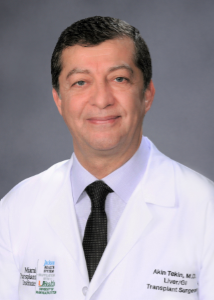
Akin Tekin, MD
General Surgery, Transplant Surgery
Miami Transplant Institute
1801 NW 9th Ave Miami, Florida 33136
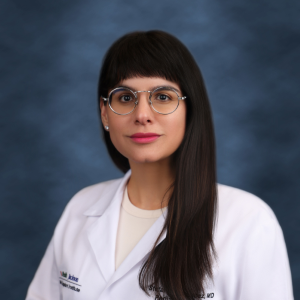
Stefany Hernandez Benabe, MD
Pediatric Gastroenterology, Pediatric, Transplant Hepatology
Miami Transplant Institute
1801 N.W. 9th Avenue Miami, Florida 33136